

Anal Fistula Surgery Recovery: Day-by-Day
Recovering from an anorectal procedure requires patience, proper wound care, and realistic expectations. Understanding what happens during anal fistula surgery recovery helps patients feel prepared, reduces post-procedural anxiety, and supports smooth healing. Because an anal fistula involves a tunnel connecting an infected anal gland to the outer skin, surgical repair focuses on opening or closing this tract while preserving the surrounding sphincter muscles responsible for bowel control.
Every patient's journey through anal fistula surgery recovery is unique. The healing timeline depends significantly on the anatomical complexity of the fistula, whether a fistulotomy, seton placement, or advanced laser procedure was performed, and individual physical healing capacity. At Dr. Ram Advance Surgical Hospital, our medical team prioritizes patient education and individualized post-operative guidance to ensure comfortable recovery after anal fistula surgery.
What Happens Immediately After Anal Fistula Surgery?
Immediately following your procedure, you will be moved to the post-anesthesia care unit (PACU) or recovery room. Medical staff will closely monitor your vital signs, assess initial wound status, and manage early post-operative sensations as anesthesia gradually wears off.
- Pain and Discomfort: You may feel a dull ache, pressure, or tightness in the perineal region. Local anesthesia injected during surgery often provides immediate post-procedure pain relief for several hours.
- Dressing and Wound Care: A absorbent surgical dressing or gauze packing will be placed over the operative area to absorb initial drainage and manage localized bleeding.
- Eating, Drinking, and Mobility: Once fully awake and cleared by nursing staff, you can sip water and consume light foods. Walking short distances with assistance is encouraged to promote blood circulation.
- Discharge Instructions: Most simple procedures allow for same-day discharge. Before leaving Dr. Ram Advance Surgical Hospital, your clinical team will provide detailed instructions regarding medications, wound hygiene, and activity limitations.
Anal Fistula Surgery Recovery: Day 1
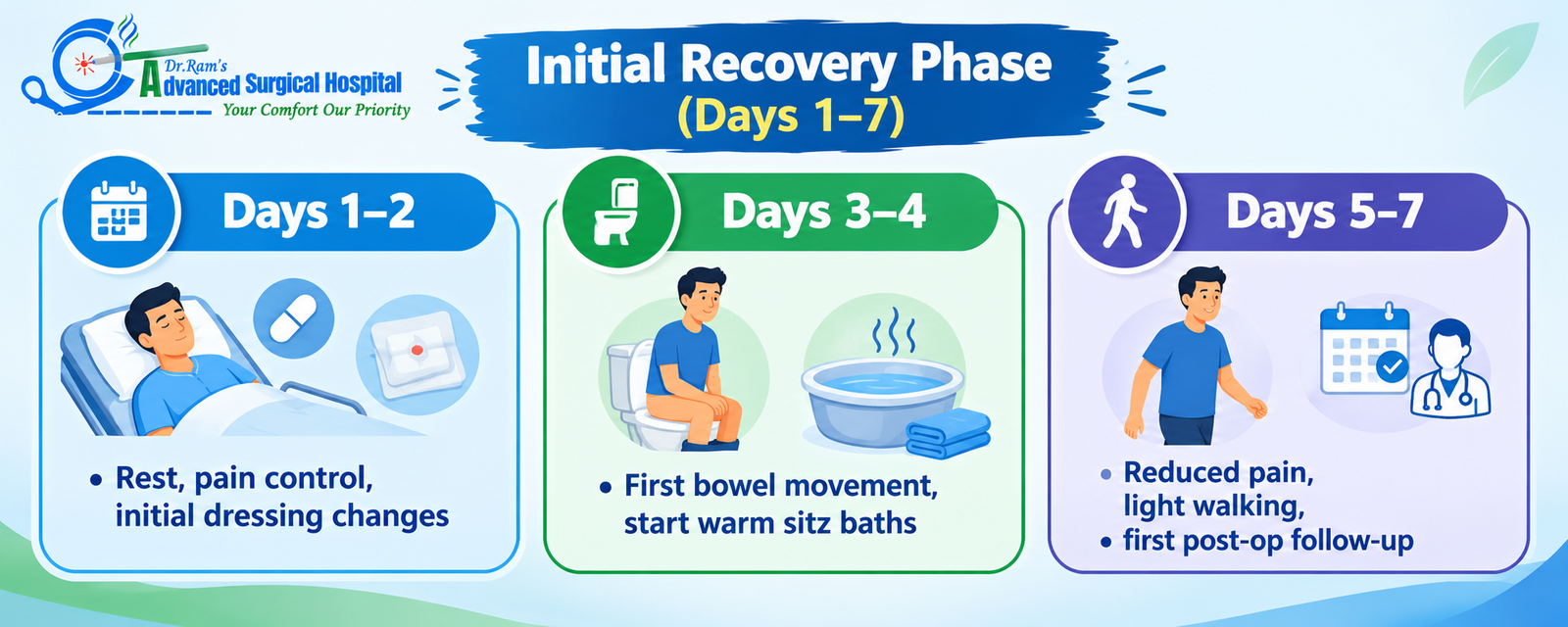
The first 24 hours at home represent the initial phase of anal fistula surgery recovery. During this time, the focus is on rest, gentle mobility, and maintaining pain control before discomfort escalates.
Expected Discomfort and Drainage
It is entirely normal to experience localized soreness, swelling, and moderate serosanguinous (bloody or clear yellowish) drainage. Expect to change outer gauze pads several times throughout the day as fluid drains from the surgical tract.
Medication and Hygiene Routine
Take prescribed analgesics and stool softeners exactly as directed by your surgeon. Avoid taking unprescribed pain relievers that might irritate your stomach or increase bleeding risks. Keep the area clean by gently blotting with soft gauze; avoid harsh toilet paper or aggressive wiping.
Rest, Mobility, and Bowel Habits
Plan to spend most of Day 1 resting in bed or lying on your side to minimize direct pressure on the anal region. You may not feel the immediate urge to pass stool, which is common after regional or general anesthesia.
Days 2–3: Managing Pain and Bowel Movements
Days 2 and 3 often represent the most sensitive period for anal fistula operation recovery. Managing your first bowel movement and establishing a consistent hygiene routine are key milestones during this phase.
Passing Stool After Surgery
Having a bowel movement after fistula surgery can cause temporary sharp discomfort or anxiety. To make stool passage softer and less painful:
- Never strain or push forcefully on the toilet.
- Take prescribed stool softeners continuously.
- Drink plenty of fluids to keep stools hydrated and easy to pass.
Warm Sitz Baths
Your surgeon may recommend starting warm sitz baths on Day 2 or 3. Soaking the lower body in plain warm water for 10 to 15 minutes two to three times a day—and immediately after bowel movements—helps relax tight sphincter muscles, reduces pain, and cleanses the open surgical site naturally.
Days 4–7: Early Healing
By the end of the first week, early anal fistula surgery healing becomes noticeable. Acute surgical pain typically transitions into a manageable, dull ache, allowing you to gradually expand daily low-impact activities.
- Changes in Drainage: Fluid drainage from the surgical wound may remain steady or decrease slightly. Pink, light brown, or pale yellow discharge on gauze pads is expected as the wound heals from the inside out.
- Returning to Daily Activities: You can engage in light household walking and short periods of sitting on supportive cushions. Avoid prolonged sitting on hard surfaces.
- Work Considerations: Patients with sedentary desk jobs may consider returning to light work toward the end of Week 1 or during Week 2, provided pain is well-controlled. Those with physically demanding or heavy-lifting roles will require additional time off.
Week 2: What Should You Expect?
Entering the second week of recovery after fistula surgery marks a stable transition phase. Surgical wounds created during open fistulotomies or seton procedures continue to fill with healthy granulation tissue.
Discomfort during daily routines and bowel movements should show a steady decrease. Many patients no longer require strong prescription pain medications and manage mild residual soreness with mild over-the-counter analgesics recommended by their clinical team.
It is vital during Week 2 to maintain soft bowel habits. A single episode of severe constipation or straining can disrupt delicate healing tissue and cause sudden pain or fresh bleeding. Surgical care teams at Dr. Ram Advance Surgical Hospital emphasize continuing fiber intake and adequate hydration throughout this period.
Weeks 3–6: Progress Toward Complete Healing
The timeline for fistula surgery healing time stretches over several weeks. While surface skin may appear partially closed by Weeks 3 to 4, deeper tissue consolidation continues under the surface.
Typical Progression
- Physical Activity: With your surgeon's approval, you can gradually resume light exercise, routine walking, and normal office work. High-impact sports, heavy weightlifting, and cycling should be deferred until complete clinical clearance.
- Wound Closure: Open wounds progressively shrink in size. Fluid drainage noticeably decreases, changing from cloudy discharge to minimal clear moisture.
- Follow-Up Milestones: Attending scheduled post-operative visits allows your surgeon to inspect tissue healing, adjust setons if applicable, and verify that the fistula tract is closing properly from the base outward.

Factors That Affect Anal Fistula Surgery Recovery
The duration and ease of recovery after anal fistula surgery vary among individuals due to several clinical and lifestyle parameters:
- Fistula Complexity: Simple low-lying fistulas heal faster than complex, deep, or high-lying tracts involving significant sphincter muscle tissue.
- Surgical Approach: Minimally invasive techniques (such as laser fistula procedures or VAAFT) generally offer shorter recovery windows and less surface tissue disruption than traditional open fistulotomy or seton placements.
- Pre-existing Abscess or Infection: The presence of active inflammation or a large preceding abscess requires longer tissue remodeling and careful infection monitoring.
- Underlying Health Conditions: Conditions such as diabetes, inflammatory bowel disease (Crohn's disease), or vascular issues can slow overall tissue healing rates.
- Lifestyle Factors: Smoking, poor dietary habits, inadequate hydration, and chronic straining directly impede healthy post-operative fistula care and healing.
Foods That May Support Recovery
Maintaining soft, well-formed, easy-to-pass stools is essential throughout your anal fistula surgery recovery. Nutrition plays a direct role in preventing constipation and supporting overall tissue repair.
| Food Category | Recommended Choices | Clinical Benefit |
| High-Fiber Foods | Oats, lentils, beans, apples, pears, leafy greens | Adds natural bulk to stool, making it soft and easy to pass |
| Hydrating Liquids | Water, clear broths, herbal teas | Prevents stool dehydration and reduces pelvic straining |
| Whole Grains | Whole wheat bread, brown rice, quinoa | Promotes steady, regular intestinal motility |
| Lean Proteins | Eggs, poultry, fish, tofu | Provides necessary amino acids for tissue synthesis and wound healing |
When Should You Contact Your Surgeon?
While temporary pain, mild swelling, and light drainage are expected aspects of anal fistula operation recovery, certain symptoms require immediate medical evaluation. Contact your surgeon or Dr. Ram Advance Surgical Hospital if you observe any of the following warning signs:
- Severe, sudden, or steadily worsening anal pain unmanaged by prescribed medications
- Heavy, bright red rectal bleeding or passing blood clots
- High fever, chills, or systemic muscle aches
- Rapidly increasing redness, warmth, or tender swelling around the surgical site
- Sudden onset of thick, foul-smelling, or purulent pus discharge
- Inability to pass urine or severe difficulty emptying your bladder
- Persistent diarrhea or severe constipation lasting more than 48 hours
Tips for a Smoother Recovery
Following practical daily guidelines ensures that your anal fistula surgery healing progresses safely without unnecessary setbacks:
- Follow Medication Schedules: Take prescribed antibiotics, anti-inflammatory drugs, and stool softeners exactly as outlined by your surgeon.
- Prioritize Hygiene: Perform regular sitz baths or gentle water rinses after every bowel movement. Always pat the area completely dry.
- Avoid Straining: Never sit on the toilet for extended periods or force bowel movements. Use a small footstool to elevate your knees while passing stool if helpful.
- Wear Loose Clothing: Wear loose cotton underwear and breathable pants to prevent friction, heat accumulation, and sweat buildup around the wound.
- Protect Your Wound: Use clean, unmedicated, non-stick gauze pads inside your underwear to absorb fluid drainage and monitor discharge quality.
- Attend All Follow-Up Visits: Never skip post-operative consultations, as your surgeon needs to verify that the internal tract is healing correctly.
Frequently Asked Questions
How long does anal fistula surgery recovery usually take?
Complete tissue healing typically takes anywhere from 3 to 8 weeks, depending on the fistula's depth, whether it was a simple or complex tract, and the surgical method utilized. Many patients return to light, sedentary work within 1 to 2 weeks.
Is pain normal after fistula surgery?
Yes, mild to moderate pain, soreness, and aching are normal during the early stages of anal fistula surgery recovery. Pain levels peak within the first 48 to 72 hours and steadily diminish over the subsequent weeks as the wound heals.
When can I return to work after fistula surgery?
Most individuals with desk jobs return to work within 7 to 14 days. If your job involves heavy physical labor, lifting, or prolonged standing, your surgeon may advise taking 3 to 4 weeks off to protect the healing tissue.
Is some drainage normal after surgery?
Yes, ongoing serous, yellowish, or slightly pink drainage is a normal part of fistula surgery healing time. Open wounds drain continuously as they heal from the base upward. Using breathable gauze pads helps manage moisture effectively.
How should I care for the surgical area after bowel movements?
Clean the area gently using plain warm water or a warm sitz bath. Avoid harsh toilet paper or scented wet wipes containing alcohol. Pat the area dry gently with a clean towel or dry gauze.
When can I resume exercise after fistula surgery?
Light walking is encouraged immediately after surgery. However, high-impact activities, strenuous gym workouts, heavy weightlifting, and swimming should be avoided until your surgeon confirms complete wound closure, typically around 4 to 6 weeks post-surgery.
Can an anal fistula recur after surgery?
While surgical repair significantly reduces the risk, fistulas can occasionally recur if complex tracts branch unexpectedly or if underlying inflammation persists. Following post-operative instructions carefully and attending all clinical follow-ups at Dr. Ram Advance Surgical Hospital minimizes recurrence risks.
Conclusion
Navigating anal fistula surgery recovery requires realistic expectations, consistent hygiene practices, and dedicated post-operative care. While early recovery involves managing discomfort, changing dressings, and establishing soft bowel habits, most patients experience a smooth return to full comfort and daily activity over subsequent weeks.
Because every patient's surgical pathway and anatomical structure are unique, recovery plans should always be tailored under direct clinical supervision. Following your surgeon's guidance and attending all follow-up appointments ensures optimal healing. At Dr. Ram Advance Surgical Hospital, our surgical specialists are committed to providing empathetic, comprehensive care at every stage of your treatment and recovery journey.
Tags: Anal Fistula Surgery Recovery, Dr. Ram Advance Surgical Hospital, recovery after fistula surgery, fistula operation recovery, sitz bath after fistula surgery, laser fistula surgery recovery, colorectal surgery recovery, fistula surgery healing time, recovery after anal fistula surgery, post-operative fistula care, anal fistula surgery healing